Production principle and microbiological process of microbial organic fertilizer
1. Basic principles
Aerobic fermentation means that under aerobic conditions, aerobic microorganisms decompose and oxidize a part of organic matter into simple inorganic matter through their own catabolism and anabolic processes, and obtain the energy required for microbial metabolism from it, and at the same time convert some organic matter into synthesis The process of new cell material that enables microorganisms to grow and multiply and produce more organisms. The result of fermentation is the conversion of organic matter in the waste to the more stabilized humus.

2. Microbiological process
The microbiological process of aerobic fermentation can be roughly divided into three stages, each stage has its own unique group of microorganisms:
1) Heat production stage (medium temperature stage, heating stage)
In the initial stage of fermentation (usually 1-3 days), the mesophilic microorganisms in the compost pile use soluble and easily degradable organic matter as a source of nutrition and energy, proliferate rapidly, release heat energy, and increase the temperature of the compost pile. The temperature at this stage is in the range of room temperature to 45°C, and the microorganisms are mainly moderate temperature and aerobic types, usually some non-spore bacteria. There are many types of microorganisms, mainly bacteria, fungi and actinomycetes. Among them, bacteria mainly use water-soluble monosaccharides, and actinomycetes and fungi have special functions for decomposing cellulose and hemicellulose.

2) High temperature stage
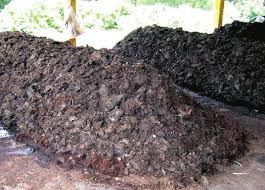
When the temperature of the compost pile rises above 45°C, it enters the high temperature stage. Usually starting from the accumulation of fermentation, the temperature of the compost pile can be quickly increased to 55°C within 2-3 days, and the pile temperature can reach the highest value within 1 week (the highest temperature can reach 80°C). Mesophilic microorganisms are suppressed, and thermophilic microorganisms are gradually replaced. In addition to the soluble organic matter remaining and newly formed in the previous stage continue to decompose and transform, complex organic matter such as hemicellulose, cellulose, and protein also begins to decompose strongly.

Thermophilic fungi and actinomycetes are mainly active at around 50℃; when the temperature rises to 60℃, the fungi almost completely stop moving, only thermophilic actinomycetes and bacteria are active; when the temperature rises above 70℃ , Most thermophilic microorganisms are no longer suitable, and a large number of microorganisms die or enter a dormant state. At this time, the heat generated is reduced, and the stack temperature automatically drops. When the stack temperature drops below 70°C, the thermophilic microorganisms in the dormant state resume activity, continue to decompose hard-to-decompose organic matter, and the heat increases, and the stack temperature is in a naturally regulated and long-lasting high temperature period.

High temperature plays an important role in the rapid decomposing of fermentation. In this stage, the humus formation process begins in the fermentation, and black substances that can be dissolved in weak alkalis begin to appear. The C/N ratio drops significantly, and the height of the manure pile decreases accordingly. High temperature can effectively kill pathogens in organic waste. The maximum fermentation temperature is required to reach 50-55°C or higher for 5-7 days.
3) Maturity stage
At the end of the high temperature stage, only some of the more difficult to decompose organic matter and newly formed humus remain. At this time, the microbial activity decreases, the heat generation decreases, and the temperature drops. At this time, the mesophilic microorganisms dominate again, and further decompose the remaining organic matter that is more difficult to decompose. The humus continues to increase and tends to stabilize. At this time, the fermentation enters the maturity stage.

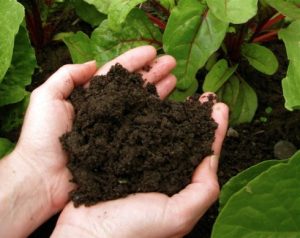
After the temperature is lowered, the oxygen demand is greatly reduced, the gap in the fertilizer pile is increased, and the oxygen diffusion capacity is enhanced. At this time, only natural ventilation is required. The common post-maturation treatment in forced-ventilation fermentation is to turn the aeration pile over once, then stop the aeration and let it decompose. It can also play a role in nitrogen preservation.