Methods For Producing Bio Fertilizer In The Fertilizer Plant.

Can you have a fertilizer plant? Are you presently experiencing increasing demand for bio fertilizer products? Do you wish to produce bio fertilizer in your own fertilizer plant? (the method to produce bio fertilizer).The fact is that there exists a huge increase in the requirement for bio fertilizers as these are completely natural. Consumers nowadays are increasingly growing health conscious and pay special focus to the origin of the food which has resulted in an enormous surge in the need for organic produce.

New Type Bio Organic Fertilizer Production Line

This increasing demand for organic produce has led to a rise in requirement for organic fertilizers and other products. To put it briefly, it’s a great chance of fertilizer plant owners such as you to cultivate your company by using a bio fertilizer production system.

While organic fertilizer is traditionally created by letting bio waste decompose naturally but such techniques are ideal for producing only a tiny amount of bio fertilizer. If you would like produce bio fertilizer commercially, you should put money into certain systems to be able to produce good quality bio fertilizer in huge quantities.

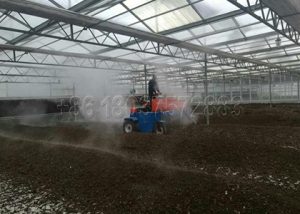
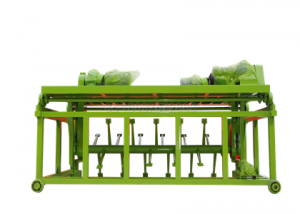
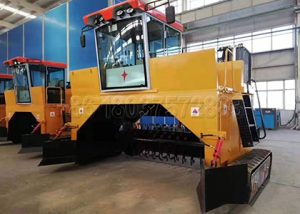
Groove Type Commercial Compost Turner for Sale

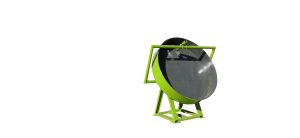
In fact, you need all the batches leaving your production facility to be of comparable quality if you would like keep your clients happy. A great way to make this happen is to get specific machines: compost making machine and granulator equipment and other auxiliary equipment in your plant.

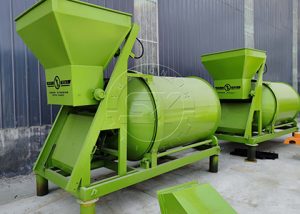
While natural decomposition will be the cheapest approach to produce bio fertilizer however when you are producing it in commercial quantities for sale, you can’t just depend on natural decomposition. You need to include beneficial bacteria all on your own in order to accelerate the whole process of manufacture of fertilizer. When this natural bacteria is added to the biomass, proper mixing has to be done so that you can produce consistent quality as well as for that, you need mixing machines which can be designed exactly for this specific purpose.

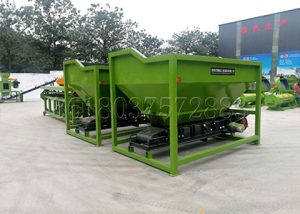
Mixing Machine for Bio-organic Fertilizer Production
Mixing Machine for organic Fertilizer Production

It can’t be done manually if you wish to achieve consistent results. Another form of machine you’re gonna require is the screening machine. A vital thing you need to bear in mind is the fact that a definite temperature range is required for keeping the beneficial bacteria alive as once the temperature reaches higher or less than this range, the bacteria will die and you will find a big loss on the hand. Therefore, pay special awareness of the temperature. Another essential thing is the water content.

In a nutshell, there exists a huge need for bio fertilizer on account of boost in requirement for organic produce all across the world. When you manage a fertilizer plant or you’re planning to create your own business, it presents a great chance of you. So, observe the above mentioned tips and start researching manufacturers of machines required for manufacturing of bio fertilizer to setup a solid foundation to your new company venture.

Email: info@fertilizer-plants.com
Is it better to ferment animal manure in a groove or piles?

In order to process livestock manure into organic fertilizer, fermentation is the most important link. Usually, there are two kinds of fermentation forms: groove composting and windrow composting. Which one is better? What is the difference?

Before fermentation, the solid feces needed for fermentation should be fully mixed with auxiliary materials and various fermentation regulators. Of course, the organic fertilizer mixer can be used in this process. Even if there are differences in particle size and specific gravity of materials, it can be fully stirred evenly to achieve a good mixing effect and is more conducive to the fermentation of materials.

Hydraulic Crawler-Type Compost Turner Machine
Hydraulic Crawler-Type Windrow Compost Turner Machine

Windrow composting machine.

Windrow composting is to stack materials into a certain height of piles, without the need to build a fermentation tank. Through the overturning function of the windrow turner machine, the natural wind is fed into the pile from both sides of the pile to provide oxygen to realize composting and fermentation.

The turner is mainly composed of tipping device, walking driving tractor and transmission system, mainly driven by internal combustion engine. Due to the low stacking height of materials, the effect of temperature rise is not good. Due to outdoor accumulation fermentation, it is easy to be affected by seasons and rainy days. In addition, its exhaust pollution, odor and water seepage will bring environmental problems.

Pig Manure Composting
Manure Composting process in Organic Fertilizer Plant

The stacker tipper is suitable for the pretreatment of sticky materials, small-scale production, farm fertilizer production, no fixed production site or temporary production. In order to make the equipment have the adaptive control function and enhance the ability of the equipment to adapt to the material, more research should be done on the self-adaptive control of the stacking height of the stacking machine. Since it is manned equipment, the cockpit with air conditioning and air filtration and purification system should be equipped to improve the working environment.

Trench fermentation.

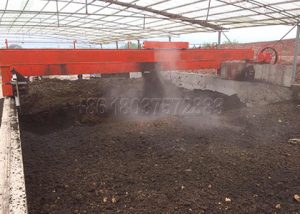
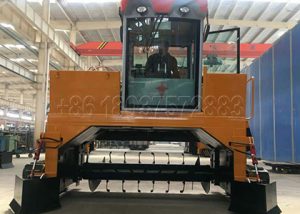
The top of both sides of the fermentation tank is equipped with rails, and the tipper can run back and forth on the track. Generally, one machine with multiple tanks is equipped for the tank type tipping machine. The transfer of the tipping machine between the fermentation tanks can be realized by the transfer machine.
In the process of tank fermentation, the state of medium temperature high temperature medium temperature high temperature alternation can be maintained and guaranteed, which can effectively shorten the fermentation period. A device for adding bacteria is set up on the tipping machine, which can spray evenly and proportionally in the fermentation process. At the same time, the ventilation pipe can be laid at the bottom of the tank to increase the ventilation capacity. There are also equipment using electricity, no exhaust pollution, odor and water seepage can be effectively controlled.

Groove Type Commercial Compost Turner for Sale

The trough tipper is suitable for fine and large-scale production, which is beneficial to production management and production cost control. Tank fermentation equipment mainly refers to tank type overturning and throwing machine. Tank type overturning and throwing machine is a kind of equipment matching with fermentation tank.

Generally speaking, the strip and pile fermentation is a relatively primitive fermentation mode, with long fermentation cycle, general fermentation effect and large area, but the production process is simple, the equipment debugging is convenient, and the cost is low. Tank fermentation has strong controllability, can effectively shorten the fermentation cycle, and has good fermentation effect. However, the civil engineering cost is relatively high, the equipment often needs to be customized, and the installation cost is high.

How to ferment mushroom residue into organic fertilizer?

Fermentation process steps of mushroom residue as organic fertilizer production line.

1. The amount of bacteria added.

With a small amount of raw materials fermentation process dosage.

2. Fermentation process.

2.1 raw material mixing ratio and composting requirements. According to animal manure and fertilizer (5-10): 1, this ratio is the weight ratio. According to the output, the width of fertilizer trough and strip stack should be well done, and the depth should be 0.8m-1.35m.

2.2 use organic fertilizer equipment for fermentation treatment. According to the need, spread the appropriate amount of bacteria, turn the pile once and turn the pile twice continuously. When the temperature rises to 50 ℃ or 60 ℃, it will be turned over and cooled down. After several times of turning, it can be fully decomposed in 7-15 days.

groove type compost turner
Groove type compost turner for turning mushroom residue

3. The middle and late stage technology of organic fertilizer equipment.

After fermentation, it can be further processed: crushing, drying, screening and packaging. Or crushing, granulation, drying, screening, coating, packaging.

If deep processing is not planned for the time being, the fermented semi-finished products can be stacked in the semi-finished products warehouse for post ripening. In the late ripening stage, it can be stacked more than 3 meters high. In order to prevent nutrition loss, plastic film should be used to cover tightly and reserve.

Organic Fertilizer Production Line

There are three configurations in the production line of mushroom residue as organic fertilizer.

High configuration of mushroom residue organic fertilizer production line.

1. Fermentation part: fermentation machines, double shaft high humidity grinder, drum screening machine
2. Granulation part: horizontal mixer, agitator granulator, dryer, cooler, drum screening machine, induced draft fan, coating machine, packaging equipment, belt conveyor, etc.

Configuration in the production line of mushroom residue organic fertilizer.

Fermentation overturning machine, semi wet material grinder, horizontal mixer, granulator, dryer, cooler, drum screening machine, packaging equipment, belt conveyor, etc.

Small Scale Organic Fertilizer Prodution Plant

Low configuration of mushroom residue organic fertilizer production line.

Fixed fermentation overturning machine, semi wet material grinder, horizontal mixer, granulator, drum screening machine, packaging equipment.

Here are more other organic fertilizer production lines for you.

Email: info@fertilizer-plants.com

Granulation process of organic-inorganic compound fertilizer.

(1)Crushing.

Fermentation storage after 1 day for crushing, fermentation of organic materials for drying, crushing, sieving.

(2) Compounding and mixing.

In the process of making a series of special fertilizers, according to different soil conditions and different crops, inorganic nutrients and minerals with concentrated organic matter and trace elements are added to make the fertilizers contain various nutrient elements needed for plant growth, such as nitrogen, phosphorus, potassium, sodium, manganese, zinc, copper, etc.
According to the formula, the mixture of nitrogen, phosphorus, potassium and fermentable materials is mixed by computer and transported to a granulator for granulation. Organic and inorganic ingredients are mixed according to different series of products mix well in a blender machine, if the proportion is 12%, about 12 tons.

Mixing Machine for Bio-organic Fertilizer Production
Mixing Machine for organic-inorganic Fertilizer Production

(3) Granulation Process.

Due to the production of biological fertilizer, mainly organic matter, cellulose, poor forming conditions, and add a function of fertilizer living bacteria group, the production process is not in contact with high temperature characteristics.
For the production of organic biological fertilizer, a new type of special granulator for organic fertilizer is used for wet granulating. After granulating, the material is sent to the dryer through the belt machine for drying.
The particle diameter was 3.0-4.0mm, and the granulation rate was more than 70%.

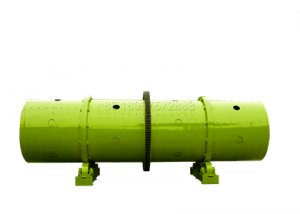
Rotary drum pelletizer machine

(4) Drying.

In the production process of biological fertilizer, not only the grain water content after forming is generally higher than the target and needs to be dried at low temperature, but also the moisture content of organic raw materials after fermentation (how to make?) is about 30%~40% and the grain water content after granulation is generally between 15% ~ 20%. The quality index of fertilizer requires water content below 14% and needs to be dried.
A section of secondary granulating area is arranged in the front of the dryer, in which secondary granulating can be realized.

(6) Cooling.

The dried materials are cooled by the belt conveyor and sent to the cooling machine. The cooling process is mainly that the natural air is sent to the cooling machine by the fan through the pipe to cool the materials. The wind direction in the cooling machine is counter-current, and the tail gas pumped into the settling chamber by the fan and the pipe is treated and discharged into the atmosphere like the dry tail gas.

After cooling, the material enters the sieve, the large particle material after being crushed enters the return belt together with the screened powder to be transported to the granulator for re-granulation, and the finished product enters the automatic packaging system for packaging.

Email: info@fertilizer-plants.com

Compost fermentation process.

Composting is actually a form of waste stabilization, but it requires special humidity, aeration conditions and microorganisms to produce appropriate temperature. It is generally believed that the temperature should be higher than 50 ℃, but not more than 65 ℃. If the temperature is too high, use a compost machine for tipping and ventilation. In addition, high temperature can inactivate pathogens and kill weed seeds. After reasonable composting, the residual organic matter decomposition rate is low, relatively stable and easy to be absorbed by plants. The odor can be greatly reduced after composting.

SX Compost Making Machine for Fertilizer Plants

There are many different kinds of microorganisms involved in the composting process. Due to the change of raw materials and conditions, the amount of various microorganisms is also constantly changing, so no microorganism has always been dominant in the composting process. Each environment has its own specific microbial flora. The diversity of microorganisms makes the composting system collapse even when the external conditions change.

Pig Manure Composting
Pig Manure Composting process in Ethiopia

The composting process mainly depends on the role of microorganisms, which are the main body of composting fermentation. There are two sources of microorganisms involved in composting: one is the original large number of microorganisms in organic waste; the other is artificial microbial inoculants. Under certain conditions, these strains have a strong ability to decompose some organic wastes, with strong activity, rapid reproduction and rapid decomposition of organic matter, which can accelerate the process of composting reaction and shorten the time of composting reaction.

How to build a compost or an organic fertilizer plant? Click here.

Email: info@fertilizer-plants.com

20,000 Tons/Year Compound Fertilizer Production Line.

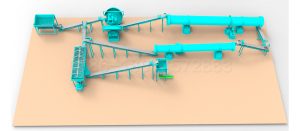
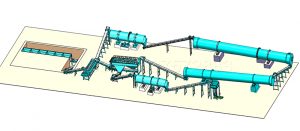
The entire arrangement of creation line, which is furnished with cutting edge and high-productivity machines, can accomplish 20.000 tons compound manure creation yearly. As per the limit, our compound manure gear is isolated into 20.000 tons. 30.000 tons. also, 50.000 tons.Customers can pick whichever creation line freely. The compound fertilizer production lines is with lower speculation. what’s more, better monetary returns. The Complete hardware are circulated minimally, sensibly, and logical. All machines. for example, compost mixer, fertilizer granulator machine, manure covering machine and so on run easily, with highlights of more energysaving, lower upkeep cost, and simpler activity.

NPK Compound Fertilizer Production Line with Rotary Drum Granulator
Compound Fertilizer Production Line with Rotary Drum Granulator

Preferred position of High-yield Compound Fertilizer Production Line

1.Wide crude materials range. Our compound manure creation line applies to granulation of different sorts of crude materials, for example, fertilizer.pharmaceuticals, synthetic substances, and feed and so on

2. High compound compost yield. This creation line can deliver various convergences of compound compost as per the proportion of crude materials.

Compound fertilizer rotary pelletizer

3. Minimal effort. You realize all compost machines are produced by our own. There is no middleman.no merchants, which precisely implies we are straightforwardly vender. We assembling, and we do unfamiliar exchange boosting the advantages of our clients with low speculation, Besides. it is workable for our customers to contact with us as expected if there is some technica issues or amassing questions.

4. Well phvsical character. Compound compost created by our creation line is with little dampness retention, and simple stockpiling, particularly helpful for motorized application.

5. The entire arrangement of manure production line gathers long stretches of specialized insight and profitability. It is a highefficiency and low-power compost creation line advanced, changed, and desianed times, which has effectively settled issues of low productivity and significant expenses at home and abroad.

Email: info@fertilizer-plants.com

In an organicfertilizer plant, what is the necessary space? What number of laborers to work? Furthermore, how to introduce the machines?

Taking a little scope natural compost process plant (disc granulation line with a yearly yield of 5000 tons) for instance.

Small Scale Organic Fertilizer Prodution Plant

Space required as underneath:

  1. Maturation stage: 20*5m.
  2. Grinding stage: 40*18m.

It is an auto preparing line. 4 laborers are sufficient to work and to keep the persistent creation of natural compost.

  • specialist for fertilizer turner activity in maturation stage.
  •  specialist for taking care of crude material.
  •  laborer for packaging machine.
  • specialist for control bureau.

    Packing Machine for Organic and Compound Fertilizer Plants
    Packing Machine for Organic and Compound Fertilizer Plants

For establishment, here are two choice.

choice 1: purchaser introduce themselves. We give processing plant plan and format.

alternative 2: we can send 2 enaineers for establishment, authorizing and preparing. Purchasers should bear visa expenses. round tickets, convenience and so on with pay 100USD every day per engineer. It will take around 20 days to complete the establishment and preparing.

Email: info@fertilizer-plants.com
Mobile Phone: +86 180-3757-2883

Will moisture affect the quality of BB fertilizer?

What are the main equipments of BB fertilizer production line?

BB fertilizer, also known as mixed fertilizer, is a mixture of single fertilizer (or multiple fertilizer) in a certain proportion. Due to the low investment, high benefit and high precision of blending fertilizer, many customers choose the equipment of blending fertilizer.

BB Fertilizer Mixer Machine

The main equipment of mixed fertilizer is composed of mobile belt conveyor, bucket elevator, electronic automatic batching system, disc feeder and packing scale. BB fertilizer is suitable for dry mixing multiple basic fertilizer with nitrogen, phosphorus and potassium fertilizer by physical method to make mixed fertilizer with multiple fertilizer and single fertilizer. There are many kinds of BB fertilizer, and the raw materials are not the same, so the physical and chemical properties of BB fertilizer are not the same. For example, the particle size is not uniform, the product storage time is short, and different chemical reactions occur between materials, so some finished products are easy to melt in the packaging bag, and even become mud, which will affect the fertilizer efficiency.

20 ton BB fertilizer fertilizer production plant

Will the moisture content of materials affect the production efficiency of BB fertilizer?

The moisture content is the main factor affecting the production of BB fertilizer. The mass fraction of urea, ammonium nitrate, nitrophosphate, ammonium phosphate and potassium chloride are all less than 3%. There will be no adverse reaction after mixing materials for a long time. However, the moisture content of granular phosphate fertilizer is uncertain, which often causes some adverse effects when it is used to produce BB fertilizer.

It can be seen from table 1 that if ammonium nitrate is used in the production of low concentration BB, the mass fraction of water in granular phosphate fertilizer should be controlled below 5.6%, otherwise the decomposition of ammonium nitrate will be accelerated and the physical and chemical properties of the product will be affected.

Email: info@fertilizer-plants.com
phone:+86 180 3757 2883

The disc granulator can granulation of cat litter, fermentation bacteria and feces

The disc granulator can granulation of cat litter, fermentation bacteria and feces. How to granulation? Zhengzhou SX organic fertilizer equipment manufacturers to tell you about the specific process.

The specific granulation process of disc granulator.

The raw meal powder is evenly wetted by atomized water in the double shaft mixer, and is opened into a ball core with uniform particle size, and then sent to the pelletizing plate for granulating fertilizer. The moisture content of the pellet should be controlled between 12% and 14%. Most of the water should be added into the double shaft mixer, and only a small amount of water should be added into the pelletizing plate, and the amount of water added should be controlled at about 0-3%. Dry powder granulation is directly added into the pelletizing plate and sprayed with appropriate amount of water. After entering the pelletizing plate, the pellet core moves along a parabola under the action of centrifugal force, friction force and gravity. Due to the cohesiveness and plasticity of materials, the ball nuclei are bonded to each other and grow up gradually.

Disc Pan Granulator for Organic Fertilizer Granulation

The particles will roll down off the edge of the plate. Because of the cohesiveness of the material and the natural volatilization of the liquid film on the surface, the material ball has a certain strength, and then with the rotation of the inclined disc body, it is discharged from the edge of the disc.

Email: info@fertilizer-plants.com
Mobile Phone: +86 180-3757-2883

Technology of pig manure fermentation organic fertilizer

The disadvantages of traditional pig manure compost and the problems of pig manure are good agricultural fertilizers.

According to statistics, pig manure produced by pig farms can reach 1.2 tons per year. Pig manure is rich in nitrogen, phosphorus, potassium and organic matter, which is an organic fertilizer resource for soil improvement.

If the fermentation is carried out according to the traditional natural compost, it also has the following disadvantages.


1. The composting time is long, usually takes 4-6 months, and the fermentation effect is poor when the temperature is low;
2. Long term stacking not only occupies the site, but also pollutes the surrounding environment;
3. The manure fermented by natural compost is rotten and stinky, which is difficult to transport and directly apply;
4. Natural composting fermentation can not remove the pathogens, eggs and other harmful substances in pig manure.

Pig manure fermentation, pig manure fermentation organic fertilizer

Probiotics contain a large number of functional bacteria (photosynthetic bacteria, lactic acid bacteria, yeast and other complex flora) and their metabolites, which can accelerate the decomposition and transformation of pig manure. It can improve the fermentation conversion rate, shorten the fermentation time, improve the fermentation effect, reduce or even eliminate the odor problem in the fermentation process, and reduce environmental pollution. In addition, probiotics can kill the growth and reproduction of pathogenic bacteria and eggs in pig manure.

The operation technology and matters needing attention of organic manure fermentation.

Pig manure is the main raw material, good to add rice straw, rice bran, wheat bran or weeds and other ingredients. The proportion of materials used is 100-200 kg / T pig manure.
Prepare diluent, and prepare 20kg diluent according to the ratio of original solution: nutrient: water = 2:2:16. The specific preparation method is as follows: first, dissolve 2kg nutrients with a small amount of hot water, then add cold water to cool down to 30-35 ℃, pour in 1kg of original solution, add enough water, and stir evenly.

Tips.

(1) The amount o

f water added should be adjusted according to the humidity of pig manure. When preparing “diluent” when it is dry, more water should be added when preparing “diluent”, otherwise, the water consumption should be reduced; when spraying “diluent”, attention should be paid to spraying several times to prevent too much water in one spraying.
(2) Sealed fermentation. During anaerobic fermentation, if the sealing is not tight, it is easy to enter the air and cause high noise organic fertilizer quality.
(3) Fermentation time and temperature.

Composting in Winter

Generally, the fermentation time is 20-25 days in spring and autumn, 15-20 days in summer and 30-40 days in winter. The suitable environment temperature for fermentation is 25-35 ℃.

(4) Fermentation completion standard. The compost with good fermentation smell has Qu flavor but not odor.

Compared with the traditional composting pig manure, the soil pH can be reduced by 0.25 points with the adjustment rate of 3.36%.

The contents of soil organic matter, total nitrogen, phosphorus and available potassium were significantly increased after applying pig manure fermented by organic manure.
Shunxin pig manure fermentation tank covers a small area, which is one thousandth of the traditional fermentation area. It can save the capital investment of farms or organic fertilizer plants, greatly increase the space for material fermentation, win greater economic benefits for manufacturers, and also more conducive to large-scale batch production.

Email: info@fertilizer-plants.com
Mobile Phone: +86 180 3757 2883

What are the factors affecting the fermentation of windrow organic fertilizer?

Now, there are many types of composting in our company. In the process of windrow fermentation, the influencing factor is actually the moisture content of the material.

Mulch windrow turner for sale

In the process of organic fertilizer fermentation, the moisture of material can regulate the aeration and temperature of the compost; it is an important medium for microbial life activities, affecting the growth and reproduction of microorganisms; it can make the compost materials easy to decompose after softening; the flow of water makes the bacteria and nutrients evenly distributed, which is conducive to the uniform decomposition of materials. It can be seen that moisture content is an important parameter in organic fertilizer fermentation process. The initial moisture content of 50% ~ 60% is suitable, and the moisture content should not exceed this range in the whole fermentation process. Chinese experts believe that composting with cow dung and rice straw can obtain and maintain a higher temperature when composting with 65% moisture content than that with 50% moisture content, which is conducive to the killing of pathogenic bacteria.

Windrow Turning Machine for Sale

According to the actual situation of the material source of organic fertilizer production in rural areas, the agricultural experts in our country carried out the research on the moisture content of different materials in order to explore the suitable moisture content of organic fertilizer stacking fermentation materials. Generally speaking, the moisture content of different materials is the most important factor in organic fertilizer fermentation. Therefore, in the future fermentation process, we must control the moisture of fermentation materials.
The above is the organic fertilizer stack fermentation need to pay attention to the moisture of different materials, I hope to help friends with this demand.

If you want to learn more composting machine for your organic fertilizer plants (https://www.fertilizer-plants.com/), you can contact us.

Email: info@fertilizer-plants.com
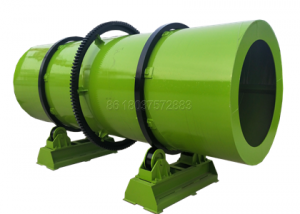
Phone: +86 180 3757 2883

What factors should be considered when pelleting potassium fertilizer?

Key factors that you should consider.

We all know that the development of agriculture is inseparable from the help of fertilizer, and there are many kinds of fertilizers. In the past, we often introduced organic fertilizer and chemical fertilizer, but today we have to introduce the related knowledge of potash fertilizer. The production of potash fertilizer is inseparable from the help of potash fertilizer extrusion granulator, just as organic fertilizer cannot do without the help of organic fertilizer equipment. Therefore, we need to pay special attention to the quality of potash fertilizer granulator. Generally speaking, the production of both organic fertilizer and potash fertilizer is inseparable from granulator equipment. Therefore, when producing potassium fertilizer granules, we need to compare the capabilities and characteristics of various granulation processes to select relevant equipment. The key factors to be considered are as follows:

Double roller extrusion fertilizer granulation machine

1. Raw material factor

According to the characteristics of different raw materials, different granulation methods should be selected. For consideration of rolling granulation, it is necessary to investigate whether the fineness of the powder is sufficient. If the raw material is too large, it is not suitable to use rolling pelletizing. If we choose granulating, we need to consider whether the original powder is kneaded with water or other liquids. If there is a certain plasticity in the water or other liquids, if the suspension is wet, it is necessary to consider whether atomization is easy. If atomization is easy, spray granulation can be considered, but spray granulation can be used. The thermal sensitivity of raw materials should be considered.

Potassium Compound Fertilizer Production Line

2. Product requirements

According to different granulation methods, the granularity of the products is quite different. For example, the granularity of spray granulation is small, but the rehydration performance is good. However, the particle size of extrusion granulation products is generally larger, and even can be used to prepare pellets. The products obtained by mixing granulation and fluidized granulation are spherical particles with irregular shape. The smoother spheroid can be obtained by rolling. For regular particles with special shape, extrusion and extrusion granulation are needed. For the selection of product particle shape, the process requirements and convenience of use should be considered. Spray granulation can be used when the particle strength is not high or the strength is too high. If the high strength of the particles is required, it is necessary to consider extrusion granulation and add appropriate binder. The porosity and density of the particles also directly affect the strength of the product. It is a pair of contradiction to improve the porosity and strength at the same time. The size of porosity and density can be adjusted to the required index through the process operation parameters.

Potassium fertilizer particles

3. Other factors

The processing capacity of different granulation methods is very different, and the space occupied by equipment is also very different. Therefore, the investment and processing cost of equipment and civil engineering must be considered. Dry granulation will inevitably lead to dust generation. However, wet granulation needs drying after granulation and consumes energy, all of which should be considered in the process design of granulator.

4. Drying method

Many granules need to be dried. There are many drying methods for particles, and the drying equipment can be divided into two categories: dynamic (such as fluidized bed drying) and static (such as belt drying and box drying) according to the movement state of particles in the drying process; according to the discharging mode, it can be divided into continuous (such as continuous fluidized bed drying, belt drying) and intermittent (box drying). When the liquid content is high, the dynamic drying is easy to agglomerate, so the static drying method is suitable. When the liquid content is low and the particles are hard, dynamic drying can be used. The fluidized bed drying has uniform heating and finishing effect, but the yield of finished product is lower than that of box drying. Continuous drying equipment is mainly suitable for large tonnage single variety. For the production of medium and small tonnage and various varieties, the intermittent drying equipment is more suitable.

What should be paid attention to in winter organic fertilizer production?

Composting in winter.

Winter production of organic fertilizer is not an easy thing for medium and small-sized organic fertilizer enterprises. Facing the change of weather, enterprises are also in a state of worry, which is also an unsatisfactory production season. Because of the cold weather in winter, the temperature is relatively low, and low temperature is harmful to organic fertilizer fermentation, so what matters should be paid attention to in winter production of organic fertilizer? Here’s how it works.

Composting in Winter

Matters needing attention for organic fertilizer production in winter.

Harm of low temperature: when the general ambient temperature of organic fertilizer equipment is about 10 ℃, the activity of specific microorganisms slows down. When the temperature continues to drop below 5 ℃, the specific microorganisms basically stop growing. At this time, if the environmental temperature is not raised by artificial methods, the organic material decomposition agent will not play the role of decomposing organic materials.

When the temperature drops below 5 ℃, microorganisms with specific functions are basically in a dormant state and stop growing. Therefore, friends who often use organic fertilizer fermentation additives should pay special attention to temperature control. Generally speaking, the best effect is when the ambient temperature is above 15 ℃.

small scale organic fertilizer plant

Solutions.

In cold winter, if you want to ferment organic fertilizer well, you need to choose a good composting site first. When it is cold in winter, but there is plenty of sunshine, stack the materials in the sunny place to fully absorb the sunlight. In fact, the temperature in the middle of the material pile may be much higher than the temperature you contact. After absorbing light, with the help of the tipper, the material can be turned back and forth evenly, so that the material can get enough oxygen. The final decomposition results can easily achieve the ideal effect of summer material stacking.

The above mentioned points should be paid attention to in winter fermentation production of organic fertilizer. However, the above method is widely applicable to the fermentation of cattle, sheep, pigs, chickens, ducks and other livestock and poultry feces, and the site selection should also be paid attention to. In winter, it should be carried out in leeward, sunny or indoor places.

Email: info@fetilizer-plants.com

Phone: +86 180 3757 2883

Technical plan for granulating organic fertilizer with an annual output of 100,000 tons

1. Process

The production process of organic fertilizer granulation is mainly to screen and classify the fermented and decomposed organic waste with a water content of about 30%, then granulate and dry to prepare round-particle organic fertilizer. Add functional bacteria to produce bio-organic fertilizer and add nitrogen. Phosphorus and potassium (the total nutrient content is less than 15%) can produce organic and inorganic fertilizers.

10 to15 ton Organic Fertilizer Production Line
10 to15 ton/year  Organic Fertilizer Production Line

2. Process characteristics

(1) The new technology of extrusion granulation, polishing and shaping can produce “spherical” pure organic fertilizer, organic-inorganic fertilizer, and biological organic fertilizer. The process flow is short, the operating cost is low, the organic fertilizer particles produced are uniform and round, the surface is smooth, the compressive strength is high, the fluidity is good, the survival rate of microorganisms is >90%, the granulation rate is 85-95%, and the particle diameter is 3.5-4 mm.

(2) The new process of extrusion granulation, polishing and shaping has strong raw material adaptability, and the fermented organic materials can be directly used for granulation without pre-drying and crushing.

3. equipment configuration

1. Mixing material feeding system

Batching Machine for Organic Fertilizer Plant

(1) Multi-dimensional high efficiency mixer. Multi-dimensional space mixing, high mixing efficiency, uniform, no dead corners, no sticky arms, suitable for mixing organic materials with high humidity; the mixer is equipped with an atomizing humidification device, which can automatically adjust the water size according to the humidity of the material to suit granulation Process requirements.

(2) The wall of the electric vibrating storage bin is equipped with a vibrator to ensure that the material containing a certain amount of moisture is smoothly fed to the disc speed control feeder.

(3) The disc-type speed-adjusting feeder is equipped with an electromagnetic speed-adjusting control system, which can automatically control the material flow according to the set parameters to ensure the continuous and uniform feeding process requirements of the extrusion granulator.

2. Extrusion granulator

Double roller extrusion fertilizer granulation machine

(1) The improved extrusion granulator for organic materials is adopted, which has high granulation density, high strength and equal particle size, which can meet the requirements of the new process of producing round-particle organic fertilizer and its efficiency is 30% higher than that of ordinary models.

(2) The template is made of alloy steel materials through advanced processes such as heat treatment, with good wear resistance and long service life.

(3) The main engine is equipped with an oil cooling circulation system to ensure long-term continuous operation.

3. Particle polishing and shaping machine

(1) This machine is the key equipment in the round granule organic fertilizer granulation production line, which can produce round granular pure organic fertilizer, organic and inorganic fertilizer, and biological organic fertilizer.

(2) The ball formation rate is 85-95%, the particles are uniform, smooth and round, and the compressive strength is high.

Polishing machine for granular organic fertilizer

(3) The wide applicability of raw materials completely solves the key technical problems such as low addition of organic raw materials (about 30%) in the traditional granulation process and the need for drying and crushing of raw materials.

(4) The stepped double disc design ensures the continuity of particle polishing and shaping, and the operability is good.


The best production technology of organic-inorganic compound fertilizer

Organic-inorganic compound fertilizer is a new type of fertilizer made of fermented organic materials such as animal manure and plant residues, adding some chemical fertilizers, and then mixing them thoroughly. It not only has the advantages of inorganic fertilizers with fast fertilizer efficiency, but also has the advantages of organic fertilizers to improve soil and lasting fertilizer effects. It can complement each other’s strengths and complement each other to maintain and improve soil fertility, increase crop yields, improve the quality of agricultural products, and achieve high yield, high efficiency, high quality, and ecological safety. The purpose of application is of great significance for maintaining sustainable agricultural development.

Complete Machines for Organic-Compound Fertilizer Production

In order to accelerate the promotion and application of organic-inorganic compound fertilizer, the following three links must be grasped in actual production:

1. Pre-treatment of organic materials.

Composting Machine for Organic-Compound Fertilizer


The pretreatment process usually refers to the organic fertilizer fermentation process. Fermentation maturity is the quality basis of organic fertilizer. The ideal conditions for fermentation include:

Moisture. Maintaining proper water content is the primary condition for promoting microbial activity and composting fermentation. Generally, the maximum water holding capacity is about 60%.

Ventilation. The use of composting equipment to maintain proper air in the pile is beneficial to the reproduction and activity of aerobic microorganisms and promotes the decomposition of organic matter. When composting at high temperature, attention should be paid to proper accumulation of tightness. In trough fermentation, try to add auxiliary materials according to the process requirements to facilitate aeration.

Carbon to nitrogen ratio. The ratio of carbon to nitrogen for the normal decomposition of organic matter by microorganisms is 25:1. The ratio of carbon to nitrogen in legume green manure is 15-25:1, weeds are 25-45:1, and grass crop stems are 60-100:1.

2. Granulation and drying adjustment.


Organic-inorganic compound fertilizer can be produced by a typical solid agglomerate process, and the process is basically similar to that of chemical compound fertilizer. The difference is that the granulation needs to adopt a rotating drum and a disc two-stage granulation, and drying also requires continuous two-stage drying to make the moisture reach the requirements of particle strength and non-caking. The production of organic-inorganic compound fertilizer also needs to add 30% of organic materials.

Compound fertilizer rotary pelletizer

3. Requirement of ingredient group.

The mandatory technical standards for organic-inorganic compound fertilizers stipulate that when the nutrient content of (N+P2O5+K2O) is 15-25%, the organic matter content is not less than 20%; when the nutrient content of (N+P2O5+K2O) is greater than 25%, the organic matter content is 15% . Due to its inherent characteristics, organic-inorganic compound fertilizers have a wide variety of organic materials. The factory needs to choose according to local organic resources and must be fully fermented and decomposed. Inorganic nitrogen, phosphorus and potassium must be selected with high nutrient content urea, diammonium phosphate, monoammonium phosphate, potassium chloride, and potassium sulfate. Chemical fertilizers are mostly inorganic salts. If microbial agents are added to organic-inorganic compound fertilizers, the amount of chemical fertilizers added should not be too high, otherwise the activity of microorganisms will be inhibited.

More fertilzier production line, click here: https://www.fertilizer-plants.com/

Email: info@fertilizer-plants.com

The cost of building a small organic fertilizer processing plant

If you want to build a small organic fertilizer processing plant, how much do you want for a small organic fertilizer production line equipment? Where is the manufacturer of pig manure organic fertilizer production equipment? How about the profit of processing one ton of organic fertilizer? How much is the profit? At a loss? How much is the cost of processing equipment for powdered organic fertilizer from pig manure, chicken manure, cow manure, donkey manure, and sheep manure, and how much does the entire granular organic fertilizer production line cost?

small scale organic fertilizer plant

organic fertilizer processing equipment

Generally, the following conditions need to be meet:
1. Fertilizer equipment manufacturer Shunxin Heavy Industry told us: The area required for the production of organic fertilizer is the area of ​​the plant, which is more than 1,000 square meters.
2. Organic fertilizer production technology. The organic fertilizer production technology uses livestock manure, municipal solid waste, crop straw, agricultural and sideline products and organic waste generated from food processing as raw materials, and is equipped with multifunctional fermentation bacteria to make it fast Smelly, decomposed, dehydrated, and then add functional microbial agents, processed into organic fertilizer containing a certain amount of functional microorganisms.
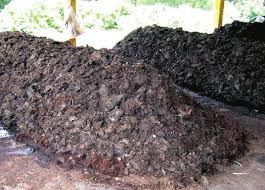
Process for Making Powdery Organic Fertilizer from Chicken Manure

The characteristics of organic fertilizer

organic fertilizer has complete nutrients, which can improve the soil and improve soil compaction caused by the use of chemical fertilizers. You can choose equipment according to your own materials and local sales market, saving money and saving. Users should not think that manufacturers who provide technical formulas are just fine. Generally, manufacturers who make equipment specialize in equipment and will not set up a scientific research team to study the formula of organic fertilizer, so these are generally some general data.

Poultry manure fertilizer granular fertilizer

Organic fertilizer produced by organic fertilizer processing equipment

How much does it cost to invest in a small-scale organic fertilizer processing plant? Investment income estimation of new organic fertilizer plant:

Labor cost: single-shift production, 5 people per shift, wages of 2,000 US dollars, labor cost: 20 US dollars / ton of finished products;

Cost of equipment and civil works after depreciation: equipment is depreciated for 10 years, and workshops are depreciated for 15 years. After equipment depreciation of USD 750,000: USD 15/ton finished product; after USD 500,000 depreciation of workshop: USD 6/ton finished product; equipment and civil works Total plant cost after depreciation: USD 21/ton finished product;
Sales promotion and management expenses, etc.: US$20/ton of finished products;

organic fertilizer pellets production

Fertilizer cost estimation: 91+20+21+20=$152/ton finished product (granular fertilizer);

Average market price of granular organic fertilizer: US$600/ton

The small-scale organic fertilizer production line has low investment, but the organic fertilizer produced can still be sold on the market. This solves the current situation of many customers who want to invest in this industry but have little capital and are favored by many customers. Because each customer’s raw materials and specific requirements for equipment are different, no specific price is provided here.

More Organic Fertilizer Production Equipment, click here.

Bio-organic fertilizer production technology

Bio-organic fertilizer production process requirements

1. The fermented raw fertilizer must undergo high temperature mineralization reaction, the maturity must reach 80%, and the organic matter must be at least 30%.

2. The high-organic sodium humate you need to add must be tested (check whether the cadmium exceeds the standard) and deep processing, that is, use 20% sodium silicate and humic acid to stir to change the original water-insoluble hydroxyl, quinone and carboxyl groups It can only be used for water-soluble organic acid.

3. Add plant growth regulator substances, such as sodium nitrophenolate, α-naphthaleneacetic acid and indole butyric acid synthesis of rooting powder and enriched carrier to form an auxin mixture, etc. Because these elements are prone to failure, they must be further processed and equipped with carriers to prevent soil colloids from fixing and failing.

4. Add chemical fertilizers, N (nitrogen), phosphorus), potassium), such as P (K (the product should be 7% content, and under special circumstances should not exceed 15%, to prevent the organic matter content from being too low and unmatched, causing Nutrient loss.

5. The blended soil microorganisms are selected from local crop rhizosphere microorganisms (due to different ground temperatures, the survival, growth and proliferation of microorganisms are different. This is the characteristic of soil microorganisms).

Bio-organic fertilizer production method

The production process of two-time element coordination is to list the elements that are not easy to volatilize during drying and are resistant to high temperature and failure (adjust the element formula with the complete nutritional properties of organic fertilizers) as the first element coordination. The functional elements that are not resistant to high temperature and easy to fail are listed as the second element coordination. First, they are pelletized and pelletized separately, and then the pellets after the first coordination and drying are dried with the second coordination without drying The dry particles are mixed and polished in a ratio of 5:1, and then the finished product is screened out.

Bio-organic fertilizer Poduction process

Perform the first coordinated mixing, crushing, granulation, drying, and screening of the original fertilizer and the drying elements; meanwhile, perform the second coordinated mixing, crushing, and granulation of the original fertilizer and the elements that are not suitable for drying; The dried granular material and the undried granular material are mixed and polished according to 5:1; finally screened and packaged.

What is organic fertilizer production process?

Production principle and microbiological process of microbial organic fertilizer

1. Basic principles

Aerobic fermentation means that under aerobic conditions, aerobic microorganisms decompose and oxidize a part of organic matter into simple inorganic matter through their own catabolism and anabolic processes, and obtain the energy required for microbial metabolism from it, and at the same time convert some organic matter into synthesis The process of new cell material that enables microorganisms to grow and multiply and produce more organisms. The result of fermentation is the conversion of organic matter in the waste to the more stabilized humus.

2. Microbiological process

The microbiological process of aerobic fermentation can be roughly divided into three stages, each stage has its own unique group of microorganisms:

1) Heat production stage (medium temperature stage, heating stage)

In the initial stage of fermentation (usually 1-3 days), the mesophilic microorganisms in the compost pile use soluble and easily degradable organic matter as a source of nutrition and energy, proliferate rapidly, release heat energy, and increase the temperature of the compost pile. The temperature at this stage is in the range of room temperature to 45°C, and the microorganisms are mainly moderate temperature and aerobic types, usually some non-spore bacteria. There are many types of microorganisms, mainly bacteria, fungi and actinomycetes. Among them, bacteria mainly use water-soluble monosaccharides, and actinomycetes and fungi have special functions for decomposing cellulose and hemicellulose.

2) High temperature stage

When the temperature of the compost pile rises above 45°C, it enters the high temperature stage. Usually starting from the accumulation of fermentation, the temperature of the compost pile can be quickly increased to 55°C within 2-3 days, and the pile temperature can reach the highest value within 1 week (the highest temperature can reach 80°C). Mesophilic microorganisms are suppressed, and thermophilic microorganisms are gradually replaced. In addition to the soluble organic matter remaining and newly formed in the previous stage continue to decompose and transform, complex organic matter such as hemicellulose, cellulose, and protein also begins to decompose strongly.

Thermophilic fungi and actinomycetes are mainly active at around 50℃; when the temperature rises to 60℃, the fungi almost completely stop moving, only thermophilic actinomycetes and bacteria are active; when the temperature rises above 70℃ , Most thermophilic microorganisms are no longer suitable, and a large number of microorganisms die or enter a dormant state. At this time, the heat generated is reduced, and the stack temperature automatically drops. When the stack temperature drops below 70°C, the thermophilic microorganisms in the dormant state resume activity, continue to decompose hard-to-decompose organic matter, and the heat increases, and the stack temperature is in a naturally regulated and long-lasting high temperature period.

High temperature plays an important role in the rapid decomposing of fermentation. In this stage, the humus formation process begins in the fermentation, and black substances that can be dissolved in weak alkalis begin to appear. The C/N ratio drops significantly, and the height of the manure pile decreases accordingly. High temperature can effectively kill pathogens in organic waste. The maximum fermentation temperature is required to reach 50-55°C or higher for 5-7 days.

3) Maturity stage

At the end of the high temperature stage, only some of the more difficult to decompose organic matter and newly formed humus remain. At this time, the microbial activity decreases, the heat generation decreases, and the temperature drops. At this time, the mesophilic microorganisms dominate again, and further decompose the remaining organic matter that is more difficult to decompose. The humus continues to increase and tends to stabilize. At this time, the fermentation enters the maturity stage.

After the temperature is lowered, the oxygen demand is greatly reduced, the gap in the fertilizer pile is increased, and the oxygen diffusion capacity is enhanced. At this time, only natural ventilation is required. The common post-maturation treatment in forced-ventilation fermentation is to turn the aeration pile over once, then stop the aeration and let it decompose. It can also play a role in nitrogen preservation.