Organic-inorganic compound fertilizer is a new type of fertilizer made of fermented organic materials such as animal manure and plant residues, adding some chemical fertilizers, and then mixing them thoroughly. It not only has the advantages of inorganic fertilizers with fast fertilizer efficiency, but also has the advantages of organic fertilizers to improve soil and lasting fertilizer effects. It can complement each other’s strengths and complement each other to maintain and improve soil fertility, increase crop yields, improve the quality of agricultural products, and achieve high yield, high efficiency, high quality, and ecological safety. The purpose of application is of great significance for maintaining sustainable agricultural development.

In order to accelerate the promotion and application of organic-inorganic compound fertilizer, the following three links must be grasped in actual production:
1. Pre-treatment of organic materials.

The pretreatment process usually refers to the organic fertilizer fermentation process. Fermentation maturity is the quality basis of organic fertilizer. The ideal conditions for fermentation include:
Moisture. Maintaining proper water content is the primary condition for promoting microbial activity and composting fermentation. Generally, the maximum water holding capacity is about 60%.
Ventilation. The use of composting equipment to maintain proper air in the pile is beneficial to the reproduction and activity of aerobic microorganisms and promotes the decomposition of organic matter. When composting at high temperature, attention should be paid to proper accumulation of tightness. In trough fermentation, try to add auxiliary materials according to the process requirements to facilitate aeration.
Carbon to nitrogen ratio. The ratio of carbon to nitrogen for the normal decomposition of organic matter by microorganisms is 25:1. The ratio of carbon to nitrogen in legume green manure is 15-25:1, weeds are 25-45:1, and grass crop stems are 60-100:1.
2. Granulation and drying adjustment.
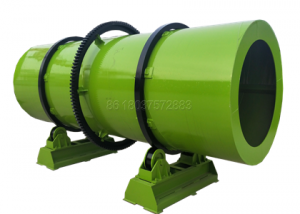
Organic-inorganic compound fertilizer can be produced by a typical solid agglomerate process, and the process is basically similar to that of chemical compound fertilizer. The difference is that the granulation needs to adopt a rotating drum and a disc two-stage granulation, and drying also requires continuous two-stage drying to make the moisture reach the requirements of particle strength and non-caking. The production of organic-inorganic compound fertilizer also needs to add 30% of organic materials.
3. Requirement of ingredient group.
The mandatory technical standards for organic-inorganic compound fertilizers stipulate that when the nutrient content of (N+P2O5+K2O) is 15-25%, the organic matter content is not less than 20%; when the nutrient content of (N+P2O5+K2O) is greater than 25%, the organic matter content is 15% . Due to its inherent characteristics, organic-inorganic compound fertilizers have a wide variety of organic materials. The factory needs to choose according to local organic resources and must be fully fermented and decomposed. Inorganic nitrogen, phosphorus and potassium must be selected with high nutrient content urea, diammonium phosphate, monoammonium phosphate, potassium chloride, and potassium sulfate. Chemical fertilizers are mostly inorganic salts. If microbial agents are added to organic-inorganic compound fertilizers, the amount of chemical fertilizers added should not be too high, otherwise the activity of microorganisms will be inhibited.
More fertilzier production line, click here: https://www.fertilizer-plants.com/
Email: info@fertilizer-plants.com

